What changes, and what does not
Four things about TorZon move often enough to cause confusion. This page keeps a dated line on each:
- the mirror list, where a failed host is dated rather than deleted;
- the front-page totals for vendors and listings, which are a live snapshot;
- the probe results, refreshed on a fixed schedule through Tor;
- the updates table, where old addresses stay visible for one cycle after a change.
The onion address itself is the stable part. TorZon opened in 2022 and has kept a single onion string throughout, so the pair of the address and the signing key is what identifies the market, not any clearnet domain. Save both outside the browser before you go further.
Read the status check for the current front-page snapshot, the uptime history for every recorded probe, and the scam check for clone patterns seen in the wild.
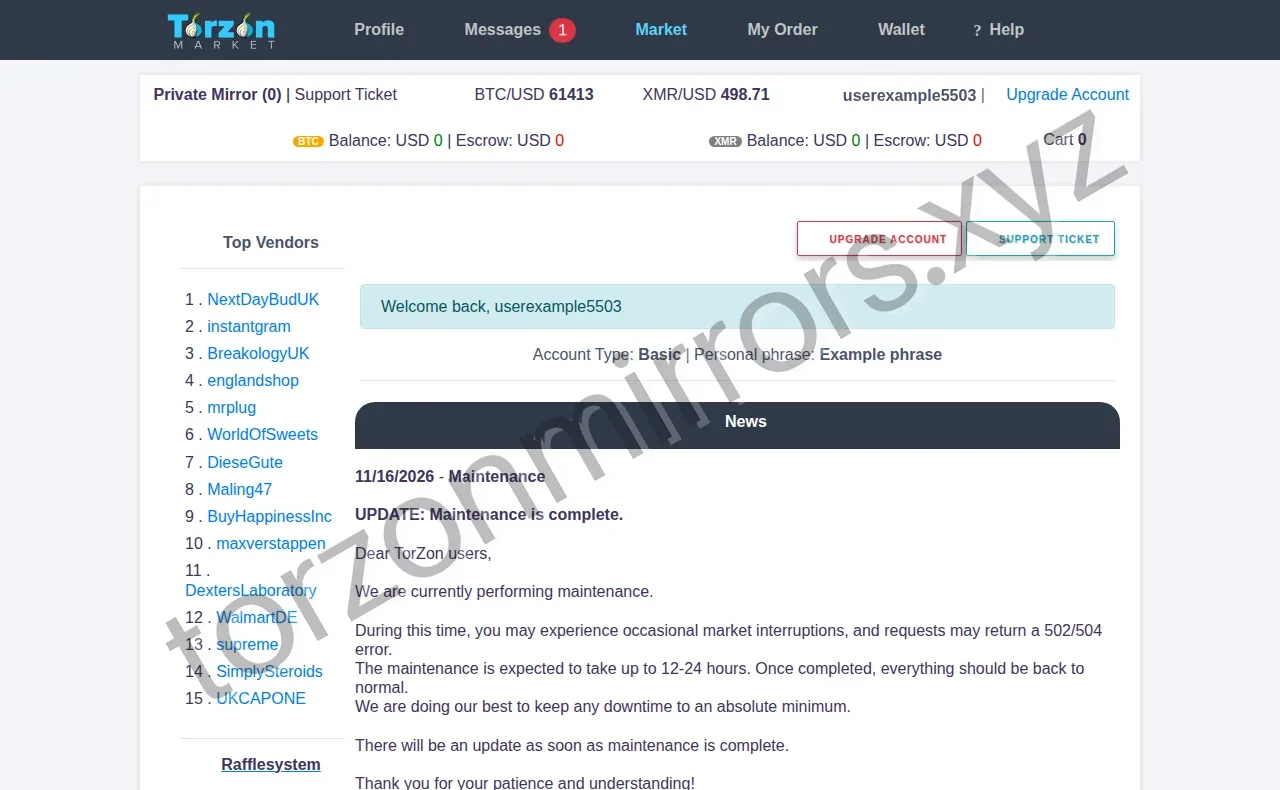
TorZon mirrors FAQ
Each answer below stands alone, so it can be read without the rest of the entry. Open the one you need.
Fewer than most markets keep. Two clearnet mirrors are tracked here at the time of writing: torzonmarket.link and torzon-onion.com, each carrying the date it was last checked, most recently . Mirrors move more often than the onion does, and a failed one is dated rather than removed. Work down the list in order rather than jumping to the last entry, because the ones near the top answered most recently.
Monero, Bitcoin and Litecoin. Monero is the option the market presents first and the one that confirms most predictably. Orders settle in escrow: the money sits with the marketplace, not the vendor, until the order completes.
Escrow releases on finalisation, or automatically 14 days after dispatch when no dispute is open. The exact date appears on the order page, so check it there rather than counting by hand.
Compare the tail of the onion string a mirror points at with the address on this page, not only the head, because clones most often swap characters where a casual glance stops reading. Then compare the PGP fingerprint shown at login against the one recorded on the PGP key page. A mirror that fails either check is not the market.
In 2022. That is long enough for an address and a signing key to be widely published, which makes a clone easier to identify: the genuine pair has been public for years, so a mismatch stands out.
If something looks wrong
Most clone sites differ in one small way: a character swapped in the link, a signing key that is close but not identical, or a login form that asks for a wallet seed. Check the link first, the key fingerprint second, and the form last. The market never asks for a wallet seed or an email address during login, and registration needs only a username and password, with two-factor authentication available.
Three probes catch most fakes: the full onion string, the fingerprint, and whether the login entry asks for more than a username and password. When you come back after a gap, compare both against this portal before typing credentials. If a mirror you saved no longer matches, the OpSec page lists the habits that keep the mistake from costing anything, and the contact page takes corrections at [email protected].
Where the numbers come from
The totals read about 1,800 vendor accounts and 12,400 listings on . They are a snapshot, not a guarantee, and they change as listings open and close. Any figure quoted without a date is a guess dressed as a statistic.
Checks are automated: a request is made through Tor at a fixed interval, and the HTTP status, time to first byte and listing title hash are recorded. A failed probe is retried once before it is written down. On the front page title hash changed behind an unchanged address, and it was re-checked by hand the same day. On torzon-onion.com returned to the list after a five-day gap. The full method sits on the about page, which explains what an independent portal does and does not verify.